

Recent Kitchen Projects


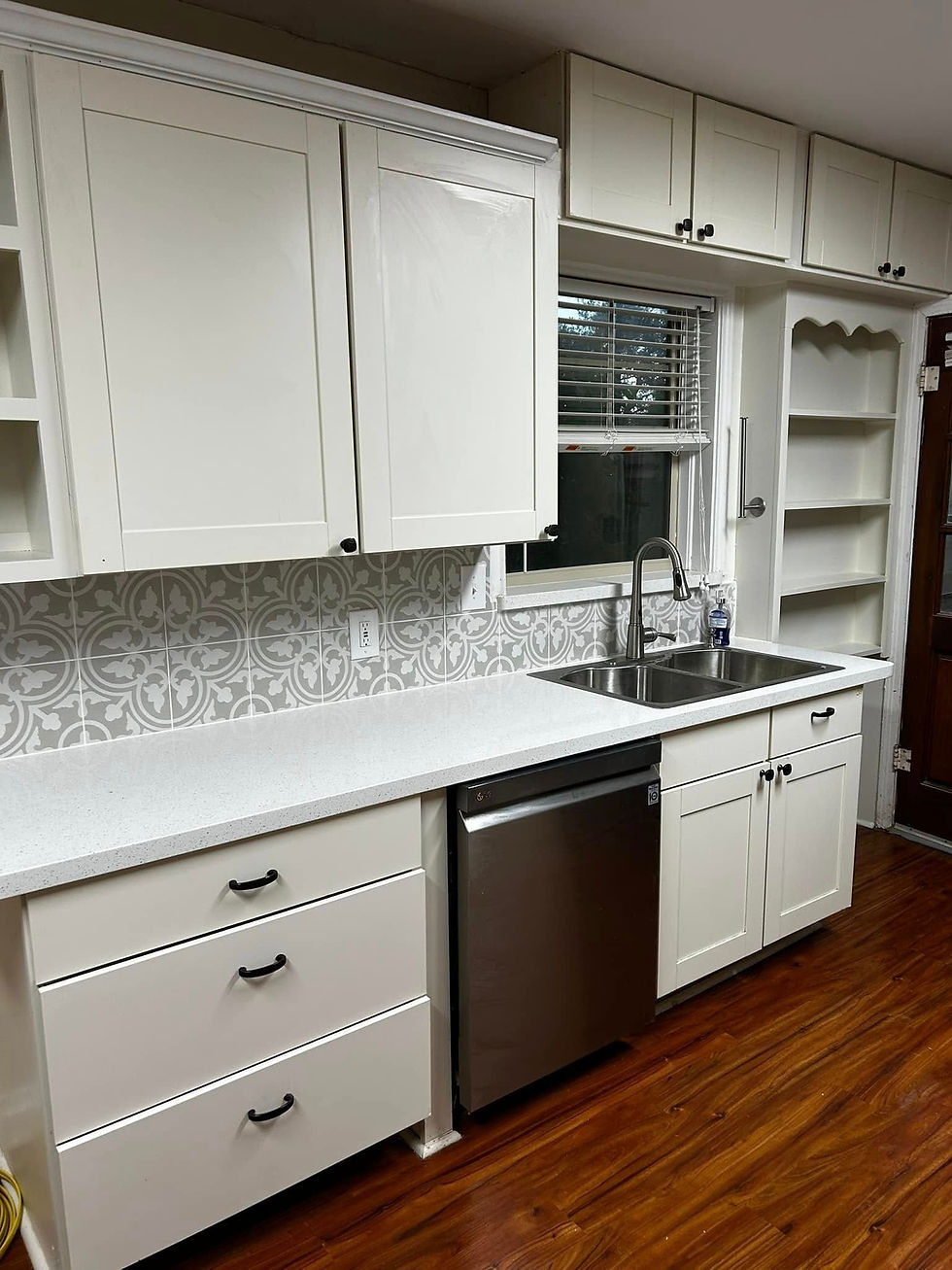

Kitchen remodeling in Edinburg for outdated layouts, insufficient storage, worn cabinetry, and inefficient appliance placement affecting daily meal preparation
Outdated kitchens show specific problems—cabinets that lack sufficient storage for current cookware, countertops with surface damage or inadequate workspace near cooking zones, flooring that no longer cleans easily or sits level, lighting that leaves work areas dim, and appliance arrangements that require excessive movement during meal preparation. Kitchen remodeling addresses these issues by reconfiguring layouts to improve workflow, installing cabinetry that maximizes storage capacity, replacing countertops with durable surfaces sized appropriately for your cooking patterns, updating flooring to materials that handle moisture and foot traffic, and repositioning lighting to illuminate preparation areas adequately.
San Roman Development manages the entire remodeling process, coordinating demolition, layout changes, cabinetry installation, countertop placement, drywall repair, trim work, flooring installation, and painting. so each component integrates properly without scheduling delays between different trades.
The remodeling process starts with layout evaluation to identify workflow inefficiencies and structural constraints, then proceeds through demolition of existing cabinets and finishes, any necessary wall modifications to open sightlines or create pantry space, installation of new cabinetry configured for your storage needs, countertop fabrication and placement, flooring installation, and finish work including trim details and painting that ties all surfaces together.
Request a kitchen remodeling estimate to review layout options and material selections for your space.
Get in Touch
WHAT KITCHEN UPGRADES ACTUALLY ACCOMPLISH
Kitchen remodeling improves functionality by repositioning appliances to reduce walking distances during cooking, adding cabinets that extend to ceiling height so storage capacity increases without consuming additional floor space, and installing countertops with adequate surface area adjacent to sinks and cooking zones. Layout improvements might include removing a short wall section to open the kitchen to adjacent living areas, relocating doorways to improve traffic flow, or adding a peninsula that provides both workspace and seating.
After remodeling completes, you notice meal preparation requires fewer steps because appliances sit logically positioned relative to each other, storage becomes accessible without rearranging items to reach what you need, countertops provide workspace where you actually cook rather than forcing preparation onto inadequate surfaces, and lighting illuminates cutting boards and stovetops instead of leaving shadows across work zones. Flooring feels stable underfoot without the flexing or unevenness that indicated subfloor deterioration, cabinets open smoothly on properly installed hinges, and painted walls coordinate with cabinetry finishes rather than clashing with outdated color schemes.
Remodeling also increases property value measurably, since kitchens rank among the highest priorities for home buyers evaluating properties. Updated kitchens with functional layouts, modern cabinetry, and durable countertops appeal more than spaces requiring immediate work, and appraisers assess kitchen condition prominently when determining comparable sale values.
QUESTIONS BEFORE REMODELING YOUR KITCHEN
Homeowners planning kitchen remodels want to understand layout possibilities, what improvements provide the most functional benefit, and how the remodeling process affects the rest of the home.
What layout improvements provide better kitchen functionality?
Layout improvements that reduce walking distances between refrigerator, sink, and cooking zones create efficient work triangles, adding counter space immediately adjacent to these areas provides adequate preparation surfaces, and incorporating storage cabinets near where items get used—dishes near the dishwasher, cookware near the stove—reduces unnecessary movement during meal preparation.How does cabinetry installation affect storage capacity?
Cabinetry that extends to ceiling height increases storage volume significantly compared to standard cabinets with unused space above them, pull-out shelving in base cabinets makes rear storage accessible without crouching and reaching, and corner cabinets with rotating shelves utilize awkward spaces that traditional designs waste.
What countertop materials work best for kitchen use in the Rio Grande Valley?
Countertop materials need to resist moisture absorption and heat damage, making engineered stone and granite suitable choices, since high humidity in Edinburg can affect laminate edges over time, and heat from cooking requires surfaces that won't scorch or discolor when hot cookware gets placed directly on them.
How long does kitchen remodeling take from start to completion?
Remodeling duration depends on layout complexity, but the process involves sequential phases—demolition and any structural changes happen first, followed by rough-in work for relocated plumbing or electrical, then cabinetry installation, countertop fabrication and placement, flooring installation, and finishing details including trim work and painting.
What parts of the remodeling process affect other rooms?
Remodeling that removes walls to open kitchen sightlines affects adjacent living or dining areas, requiring flooring transitions, drywall repair, and paint coordination in those spaces, and relocating plumbing or electrical systems may involve opening walls in nearby rooms to access utility lines, though finish repairs restore those areas to their original appearance.
San Roman Development completes kitchen remodeling projects for homes throughout the Rio Grande Valley, managing all components from layout modifications through final finish details. Contact us to schedule a remodeling consultation and review customization options for your kitchen.